
One of the most common concerns women have before a maternity session is knowing what to do in front of the camera. You may love the idea of maternity photos but still wonder where to put your hands, how to stand, or whether certain angles will photograph well. A skilled Dallas maternity photographer should guide you through all of those details rather than expecting you to arrive knowing how to pose.
Flattering maternity poses are rarely about holding one complicated position. They are created through small adjustments to your weight, shoulders, hands, chin, and the direction of your body. During a maternity photoshoot, I give continuous direction so you know exactly what to do while still allowing the photographs to feel relaxed and natural.
How Do Maternity Photographers Position Your Body?
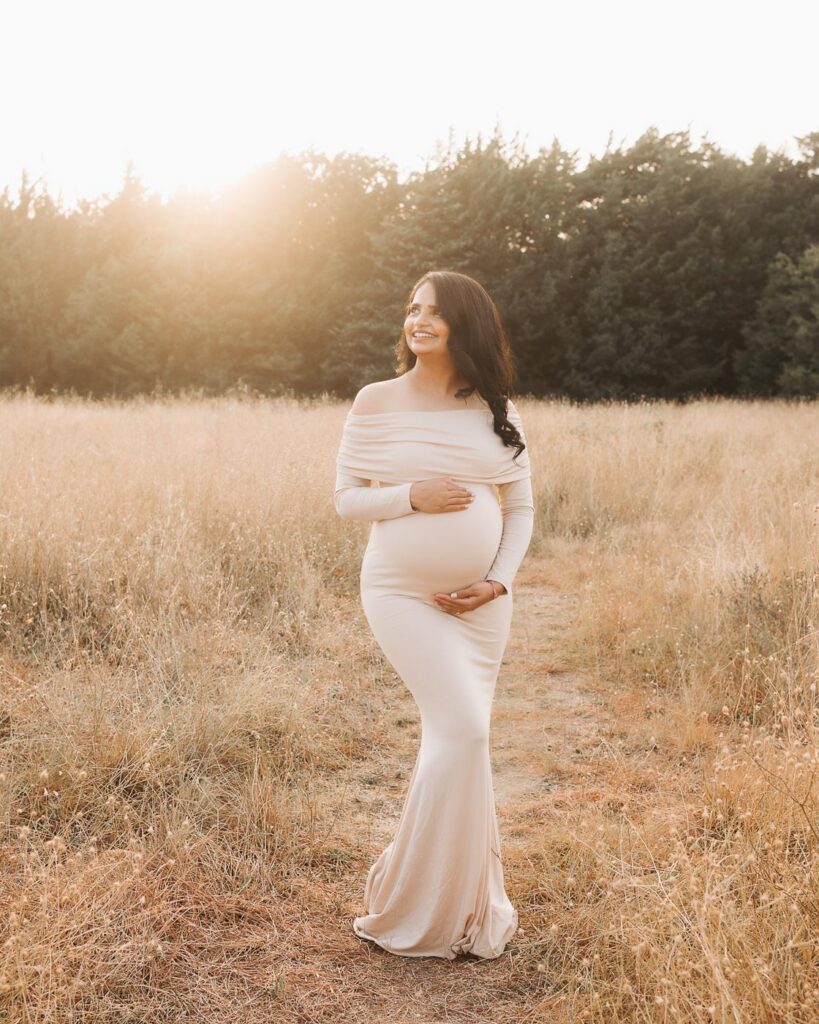
Flattering maternity posing often starts with very small adjustments to the way your body is angled toward the camera. Rather than keeping every pose completely front-facing, I may turn your body slightly to create more shape and make the belly more prominent while keeping the pose relaxed.
During maternity photography in Dallas, I also pay close attention to posture and balance. Some of the adjustments I may use include:
- Shifting your weight onto one leg
- Bringing one leg slightly forward
- Turning the hips away from the camera
- Relaxing or lowering one shoulder
- Creating space between the arms and waist
After more than a decade of photographing maternity clients, I’ve found that these subtle changes often make a bigger difference than complicated posing. Moving an elbow, adjusting the hips, or changing the shoulder angle can completely refine the shape of a portrait without making you feel overly posed.
If you would like to see how posing, wardrobe, and session style come together, you can explore the Maternity Photography Experience on my maternity site.
Where Should You Put Your Hands in Maternity Photos?
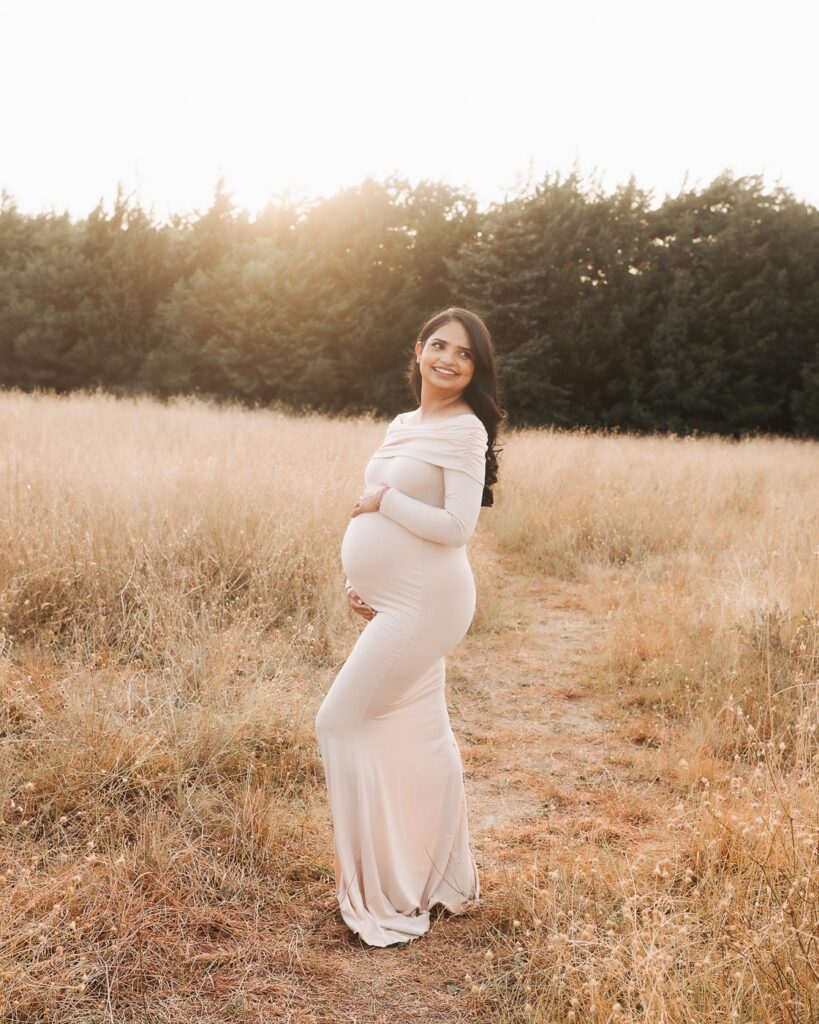
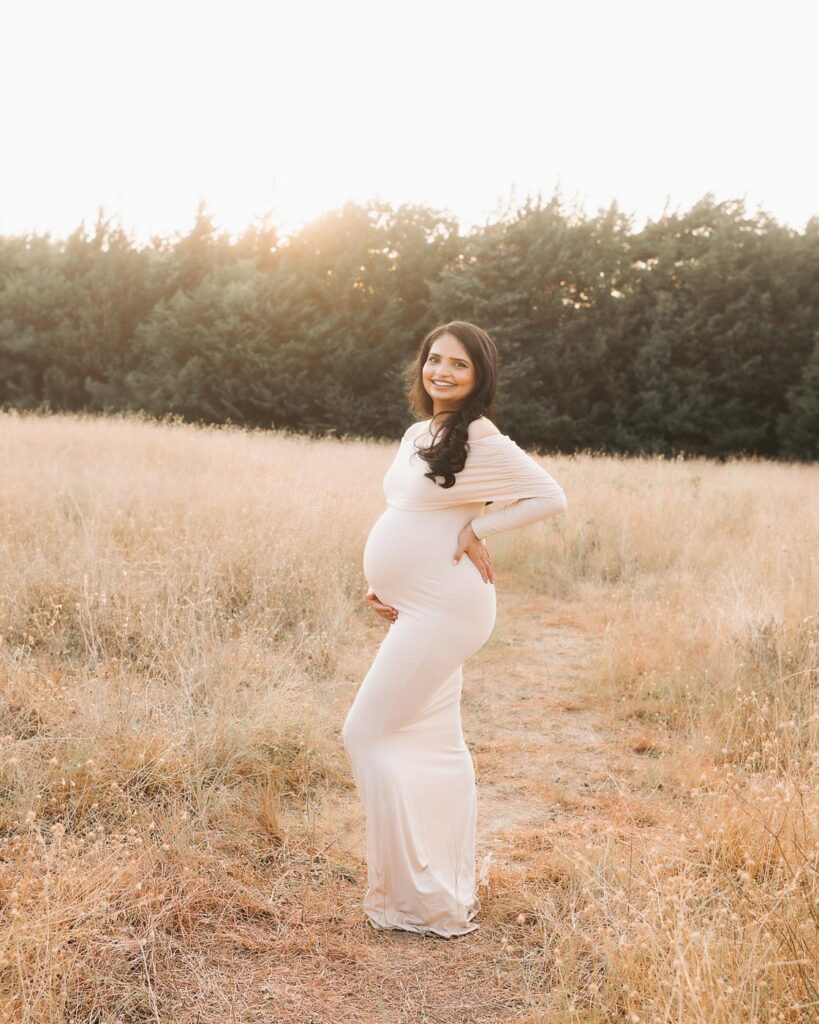
Hand placement is one of the details clients notice most when they are unsure how to pose. For maternity portraits, the hands often help define the shape of the belly. I may have one hand placed above the belly and the other underneath, or use a softer variation with one hand resting naturally along the side of the body.
The exact placement depends on the photograph. I also watch the fingers carefully because tightly pressed hands can make an otherwise relaxed pose feel tense.
Some of the hand positions I commonly use include:
- One hand above and one hand beneath the belly
- Both hands placed softly below the belly
- One hand on the hip with the other near the belly
- Hands lightly touching the gown or fabric
- A relaxed arm position when the belly is already clearly defined
Changing the hands throughout the session also gives your gallery more variety without requiring an entirely different pose every time.
Why Do Maternity Photographers Use Side Angles?
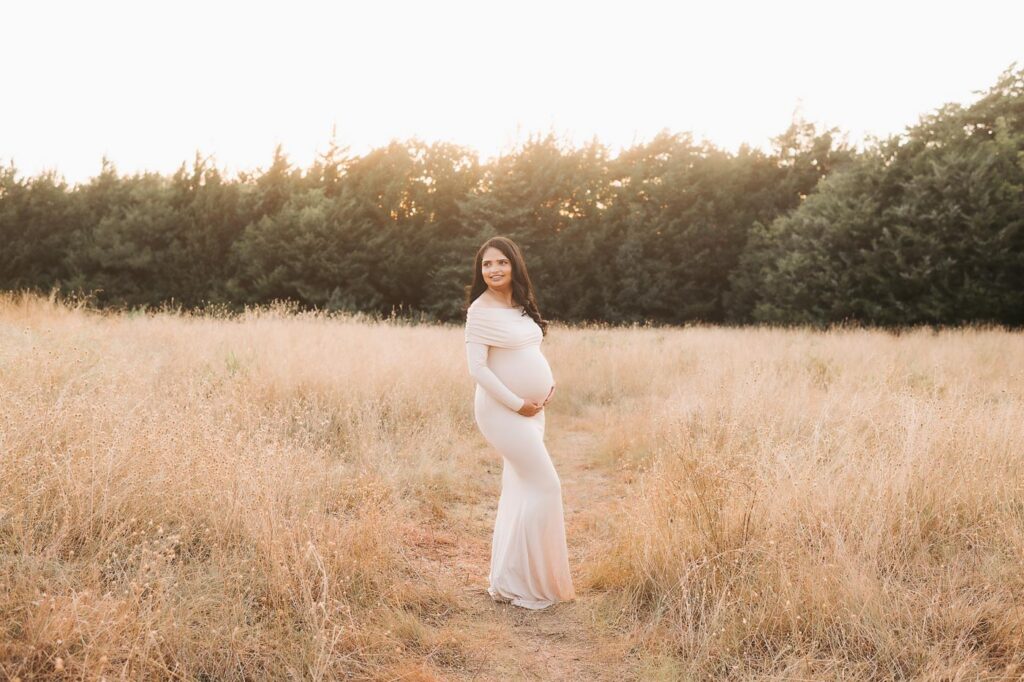
A side angle is particularly useful in maternity photography because it clearly shows the curve of the belly. That does not mean every portrait needs to be a complete profile. I often work somewhere between a front-facing position and a full side view. This keeps the belly visible while allowing me to photograph your face from a flattering angle.
For clients scheduling a maternity photoshoot in Dallas, we will usually create several variations of the same basic position. You might begin with a stronger side angle and then gradually turn toward the camera. Those subtle changes can produce very different photographs while keeping the posing comfortable.
The same principle applies whether we are photographing outdoors, creating a softer studio portrait, or working with more dramatic fine art maternity photography.
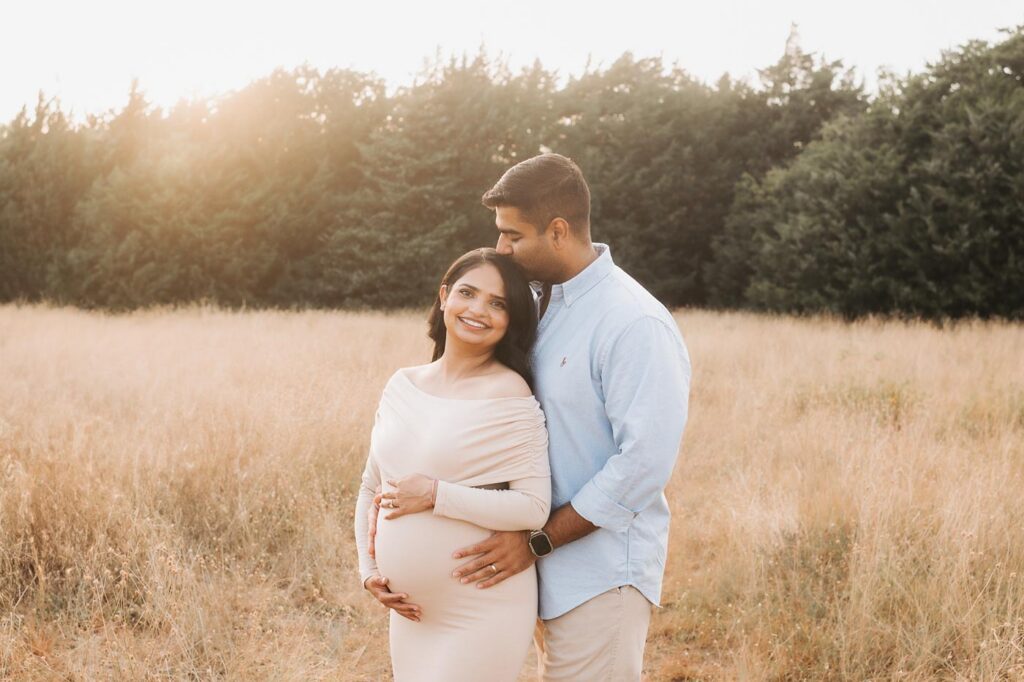
How Does a Maternity Photographer Pose Your Shoulders and Face?
The face and shoulders can change a portrait just as much as the position of the body. I may ask you to bring your chin slightly forward and down, turn your face toward the light, or move one shoulder away from the camera. These directions are intentionally small because exaggerated movements can quickly make a maternity pose look unnatural.
Shoulder placement also helps create separation between the arms and torso. When the arms press tightly against the body, they can appear wider in a photograph. Creating a little space allows the shape of the body and gown to photograph more cleanly.
Lighting matters here as well. Posing and lighting work together, so I adjust one based on the other rather than treating them as separate parts of the session.
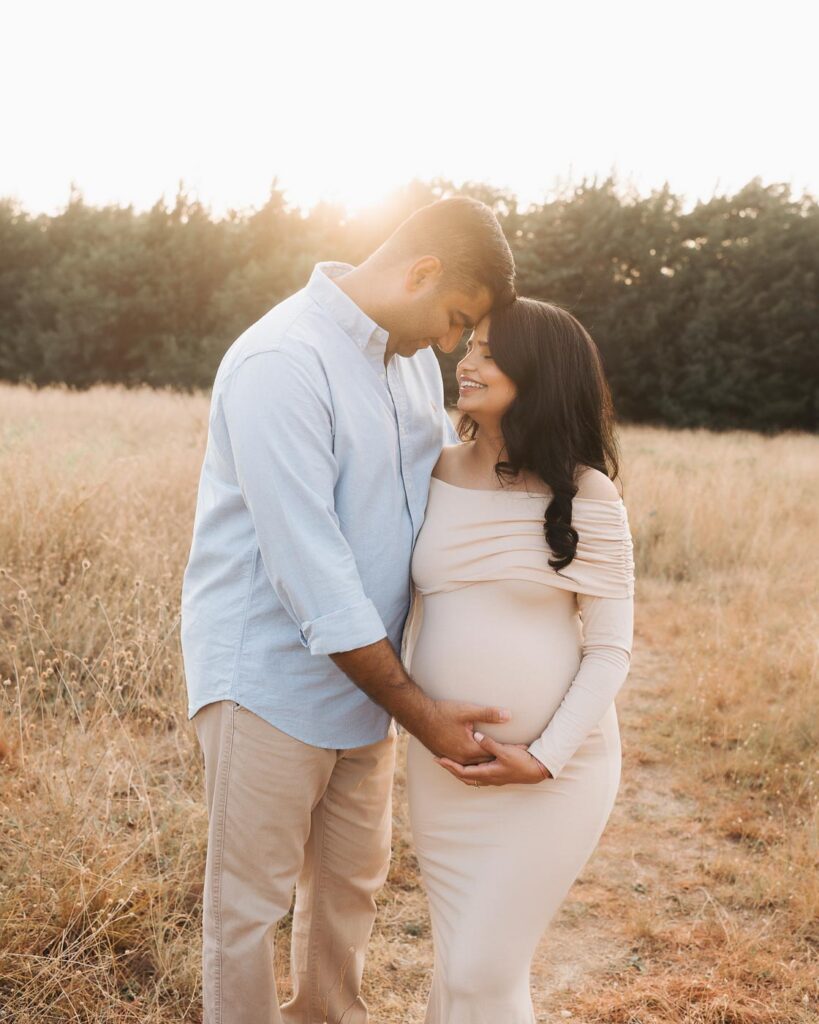
How Are Couples Posed During Maternity Photos?
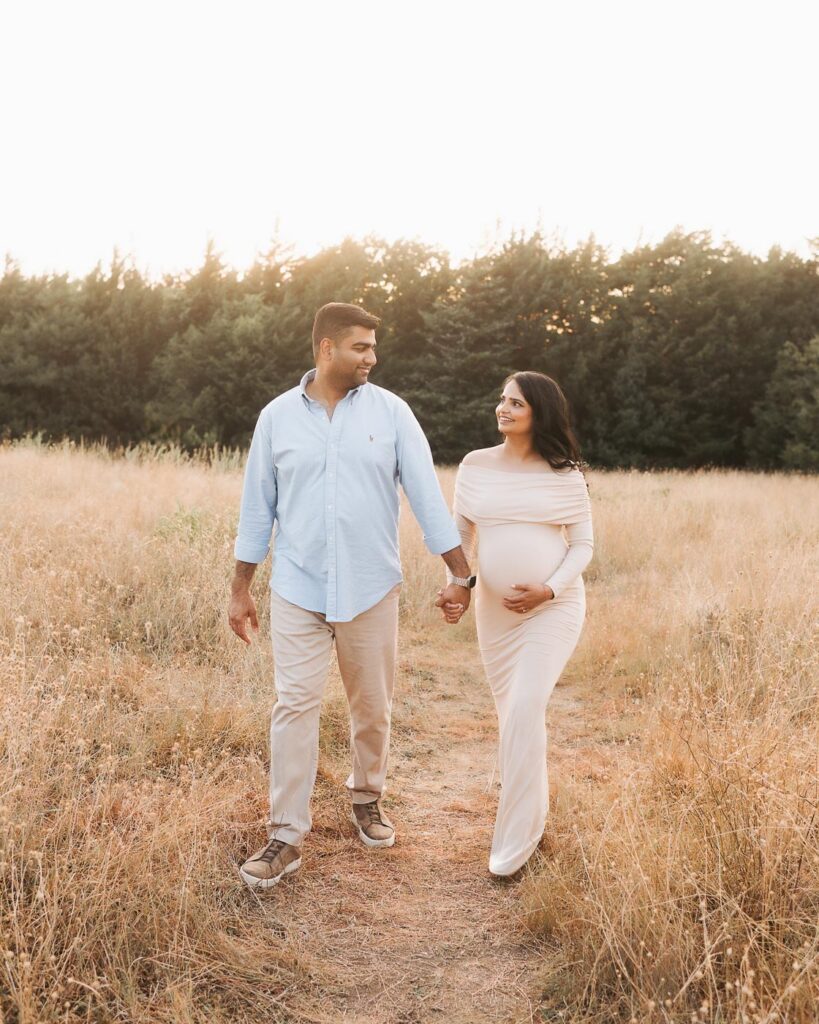
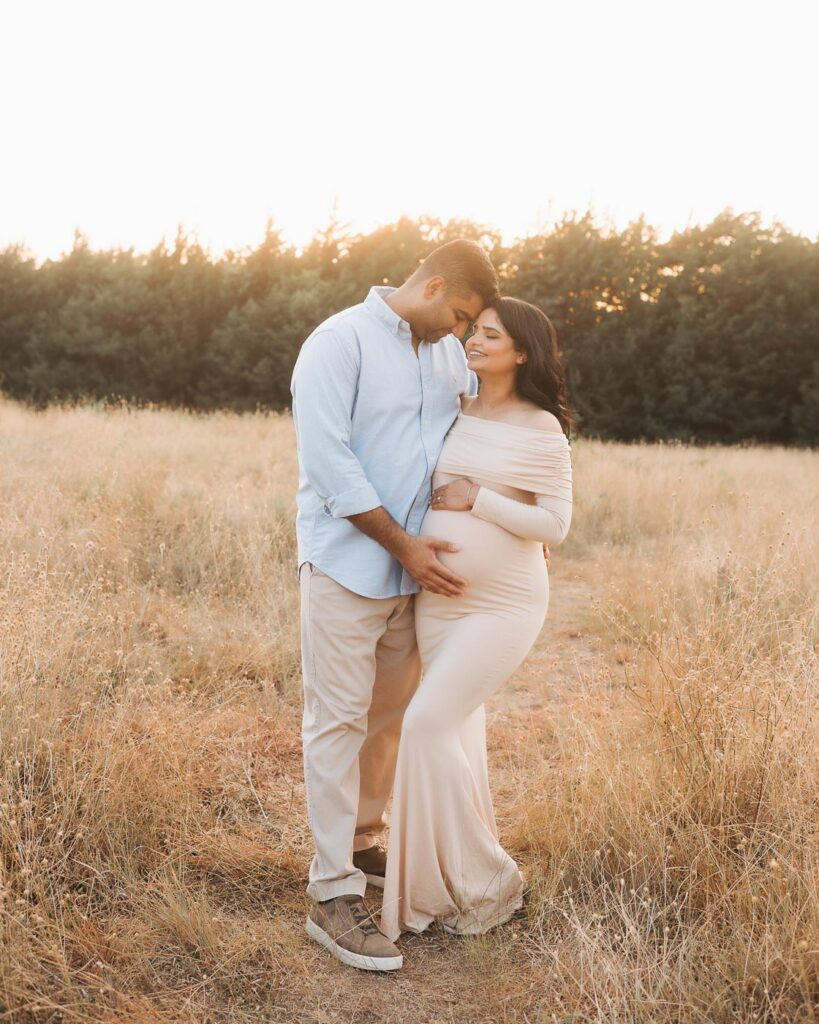
Partner portraits require a slightly different approach because I am looking at how two people fit together within the frame while still keeping the expecting mother as the visual focus. I usually begin with simple positioning, then make small adjustments based on height differences, wardrobe, location, and how naturally you interact together.
During couples maternity photos in Dallas, I may use poses such as:
- Your partner standing slightly behind you with a hand near the belly
- Facing one another for a closer, more connected portrait
- Walking together for a softer, less directed image
- Looking at each other rather than directly at the camera
From there, we can move into closer portraits and more relaxed interaction. I do not use the exact same poses for every couple because the strongest photographs usually come from adjusting the position to fit the people in front of me. If you would like your partner or children included, we can account for that before the session so there is time for both family maternity photos and individual portraits.
If you are deciding whether to include your partner, my article 5 Reasons to Include Your Partner in Your Maternity Photos explains why adding couple portraits can give your session more variety while still leaving plenty of time for individual maternity images.
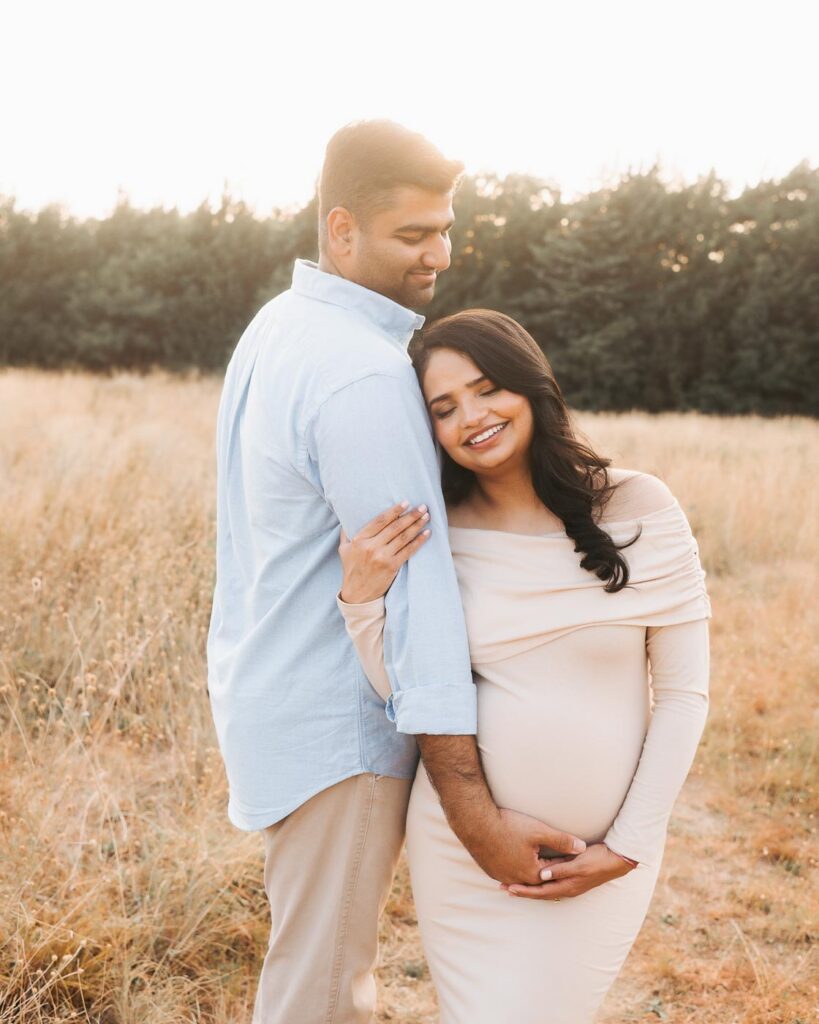
What If You Feel Awkward in Front of the Camera?
You do not need modeling experience to have flattering maternity photographs. Most clients need direction, and that is completely normal. Part of working with an experienced maternity photographer in Dallas is having someone notice the details you cannot see while you are standing in front of the camera.
Instead of simply telling you to “act natural,” I give specific direction throughout the session, including:
- Where to place your hands
- How to shift your weight
- When to turn your shoulders or chin
- Small movements that create a more relaxed pose
Once the foundation of the pose is in place, there is more room for expression and movement. I also do not rush through maternity posing. Giving you a moment to settle into a position often creates a stronger result than moving quickly from one pose to the next.
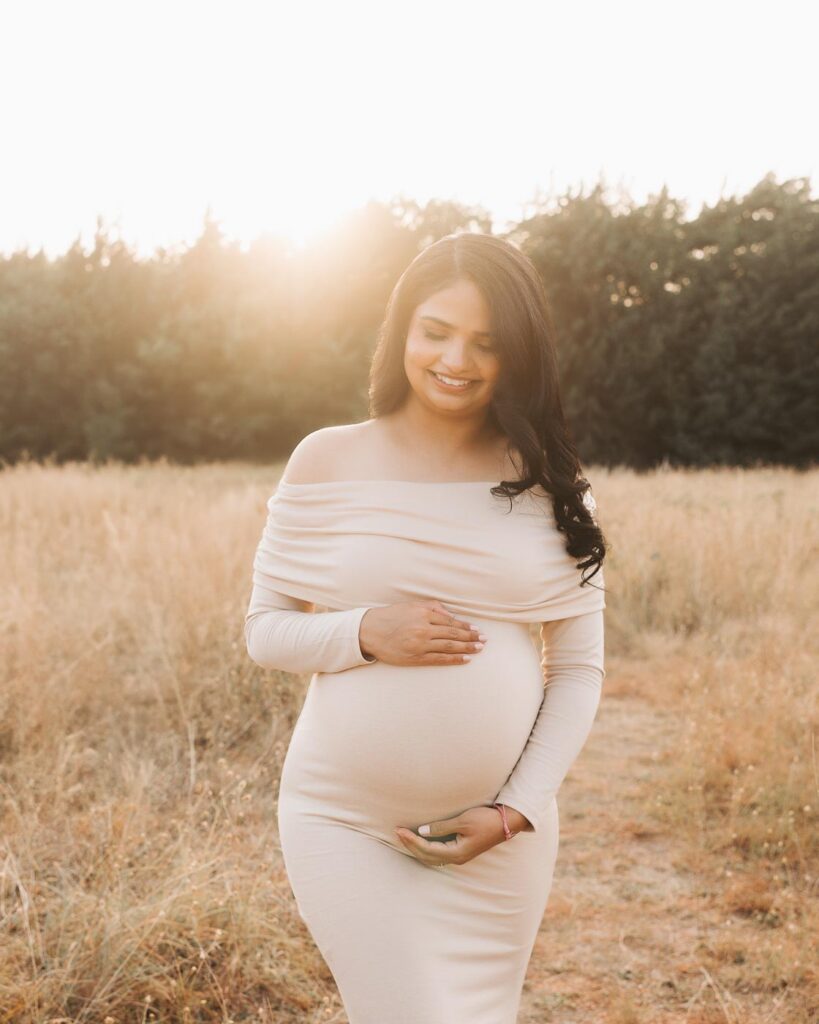
Does Your Maternity Gown Affect How You Are Posed?
Yes. Wardrobe plays a significant role in posing. A fitted maternity dress defines the body differently than a flowing gown, while couture pieces may require more attention to fabric placement, sleeves, trains, or structure. A pose that works particularly well with one gown may not be the best choice for another.
My maternity clients have access to a collection of more than 40 maternity gowns and coordinating accessories, which gives us the ability to create different looks during the session without requiring you to purchase several outfits.
You can view the Maternity Gown Collection before your session, and we can choose pieces based on the style of photographs you prefer.
How Do You Know Which Maternity Poses Will Look Best on You?
There is no single maternity pose that works exactly the same way for every woman. Your height, belly shape, wardrobe, comfort level, and whether we are working in the studio or outdoors all influence how I photograph you. That is why I prefer to build posing gradually rather than work from a fixed list of poses.
If you are comparing photographers, my Important Questions to Ask Your Maternity Photographer article covers additional details worth considering before reserving a session, including experience, wardrobe, editing, and what is included.
Looking for a Dallas Maternity Photographer?
Your maternity session should include direction throughout the entire experience, from selecting wardrobe to making the small posing adjustments that create a stronger photograph. Lily Hayes Photography offers studio, fine art, and outdoor maternity sessions for clients throughout Dallas and surrounding DFW communities.
Most sessions are photographed between 28 and 35 weeks, and reserving earlier gives you more flexibility with availability and session style. You can review Maternity Photography Pricing and session details or Inquire about maternity session availability when you are ready to reserve your date.