
Editorial maternity photography in Dallas is often associated with dramatic lighting, structured clothing, and fashion inspired poses. Those elements support the style, but they are not what makes a maternity portrait editorial. The finished appearance comes from the relationship between expression, body lines, hands, negative space, camera angle, wardrobe, and controlled studio lighting.
After more than a decade of photographing expecting mothers, I have found that the smallest areas often determine whether an image looks editorial or simply posed. A shoulder raised slightly too high shortens the neck. Fingers pressed firmly against the belly create tension. An elbow resting directly against the waist removes the negative space that defines the body. These details can appear minor during a session, but they become much more noticeable in the finished portrait.
Clients searching for an editorial maternity photographer in Dallas can view my Fine Art Maternity Photography Gallery for examples of this approach. The Dallas Maternity Photography FAQs also answer questions about session timing, wardrobe access, professional posing, and the private Rowlett studio.
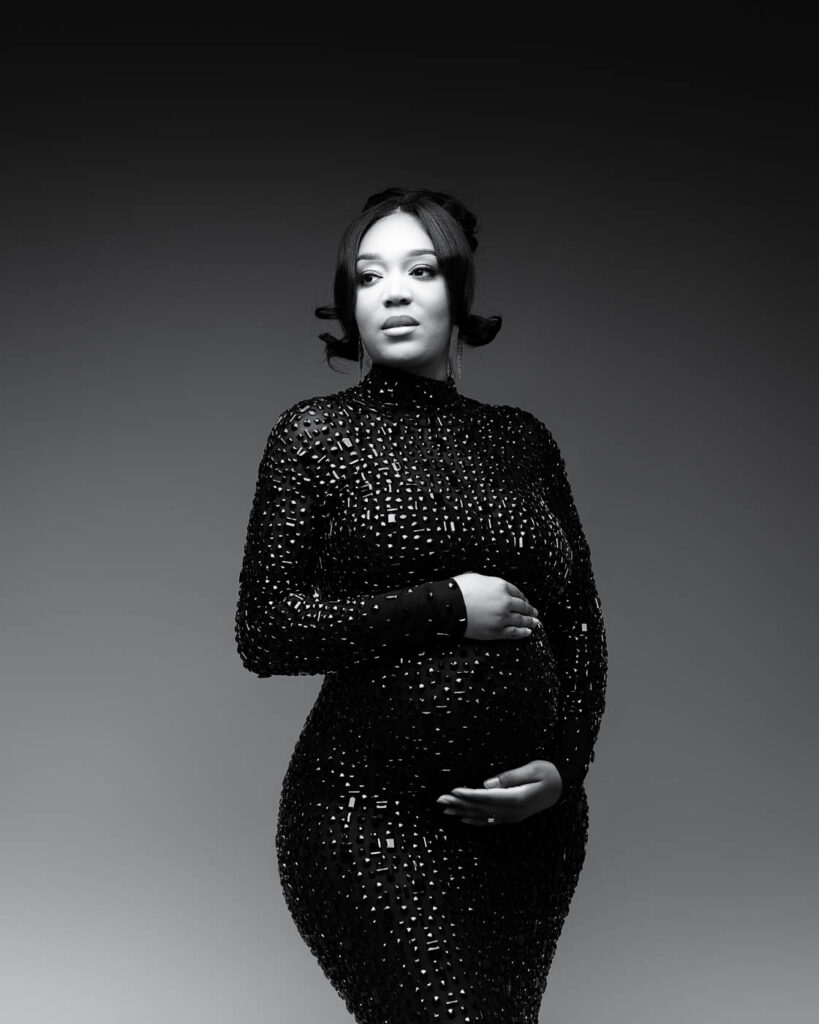
What Is Editorial Maternity Photography?
Editorial photography borrows visual ideas from fashion magazines, beauty campaigns, and professionally styled portraiture. Rather than depending on decorative sets or elaborate props, the photographs use expression, posing, wardrobe, lighting, and composition to direct attention toward the mother.
Editorial does not mean every portrait must appear serious or heavily dramatic. It means the decisions within the frame are intentional. The direction of the face, position of the shoulders, placement of the hands, shape of the clothing, and amount of space surrounding the body all contribute to the final image.
Common features of a fashion inspired maternity photoshoot include:
- Strong, calm, or understated expressions
- Structured standing and seated maternity poses
- Deliberate hand and finger placement
- Clean studio backgrounds
- Directional lighting that defines the body
- Fitted dresses, blazers, lingerie, or draped fabric
- Compositions influenced by fashion portraiture
A soft expression may create a quiet, restrained image, while direct eye contact can make the portrait feel confident. Both can look editorial when the expression supports the body position and lighting.

Why Expression Matters in Editorial Maternity Portraits
Many clients assume they must smile throughout a professional maternity session. Smiling portraits can be included, especially in couple and family photographs, but a complete gallery does not need the same expression in every image. A neutral expression places greater attention on the eyes, face, and body position. Slightly parting the lips, relaxing the forehead, and keeping the jaw loose can create an editorial appearance without making the client look uncomfortable.
This requires more direction than simply asking someone not to smile. Without specific prompts, tension often appears around the mouth, brow, neck, or shoulders. During a professionally guided maternity photoshoot, I make small adjustments so the expression feels deliberate rather than forced.
Expression may change according to:
- Whether the portrait is individual or includes a partner
- The structure and formality of the wardrobe
- Whether the pose is close, full-length, standing, or seated
- The direction and intensity of the studio light
- Whether the mother is looking toward the camera or away from it
A direct gaze may support a structured blazer portrait, while a lowered gaze can work well with draped fabric or a softer body position. Expression becomes part of the composition instead of something added after the pose is established.
How Body Lines Create Fashion-Inspired Maternity Photos
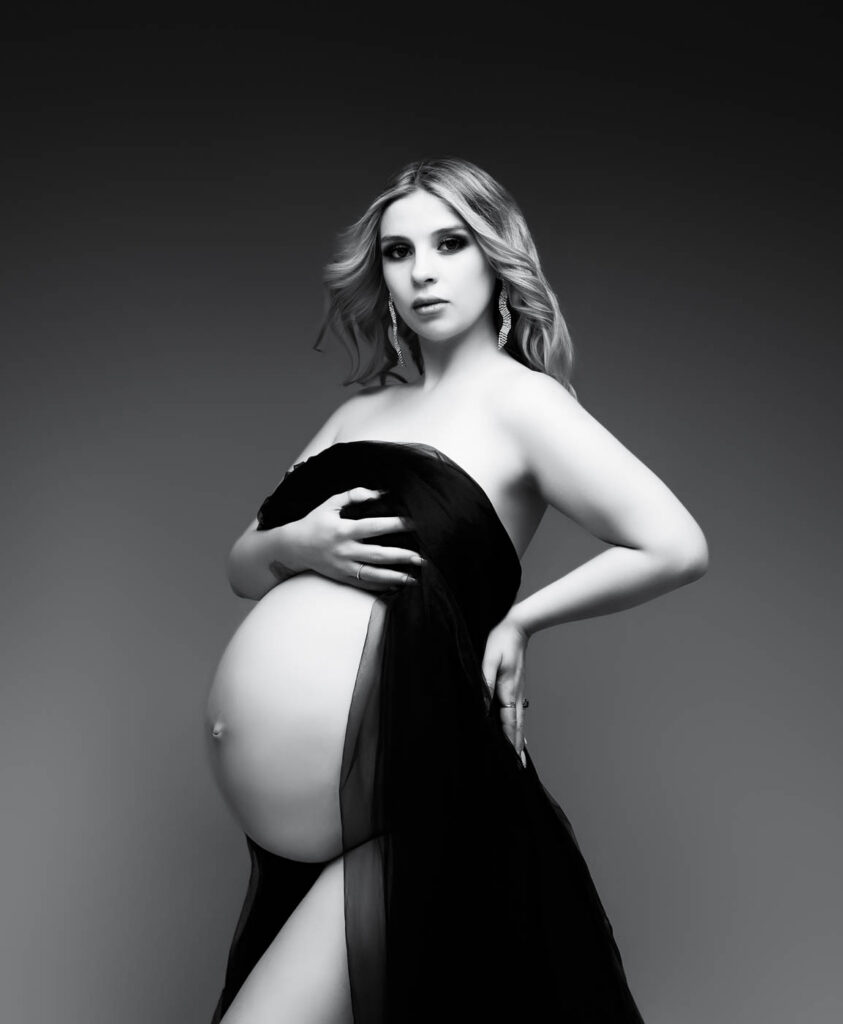
The shape of an editorial maternity portrait is established before the camera shutter is pressed. Shoulder angle, hip position, leg placement, and the direction of the belly determine how the eye moves through the photograph. A straight on pose creates symmetry and strength, but it can also reduce the visible projection of the belly. Turning the body slightly away from the camera and returning the shoulders toward the lens can define both the belly and waist.
Editorial maternity posing often uses controlled asymmetry. One shoulder may sit lower than the other, one knee may bend, or one hip may carry more weight. These differences keep the body from appearing rigid while retaining a deliberate fashion influenced shape.
During fine art maternity photography in Dallas, I watch several body lines at the same time:
- The line from the chin to the shoulder
- The opening between the arm and waist
- The curve from the lower back around the belly
- The direction created by the hands and fingers
- The relationship between the hips and legs
- The angle of the face compared with the torso
These adjustments are particularly important with fitted clothing and bare belly maternity portraits because the body’s outline remains fully visible.
How Negative Space Defines the Pregnant Body
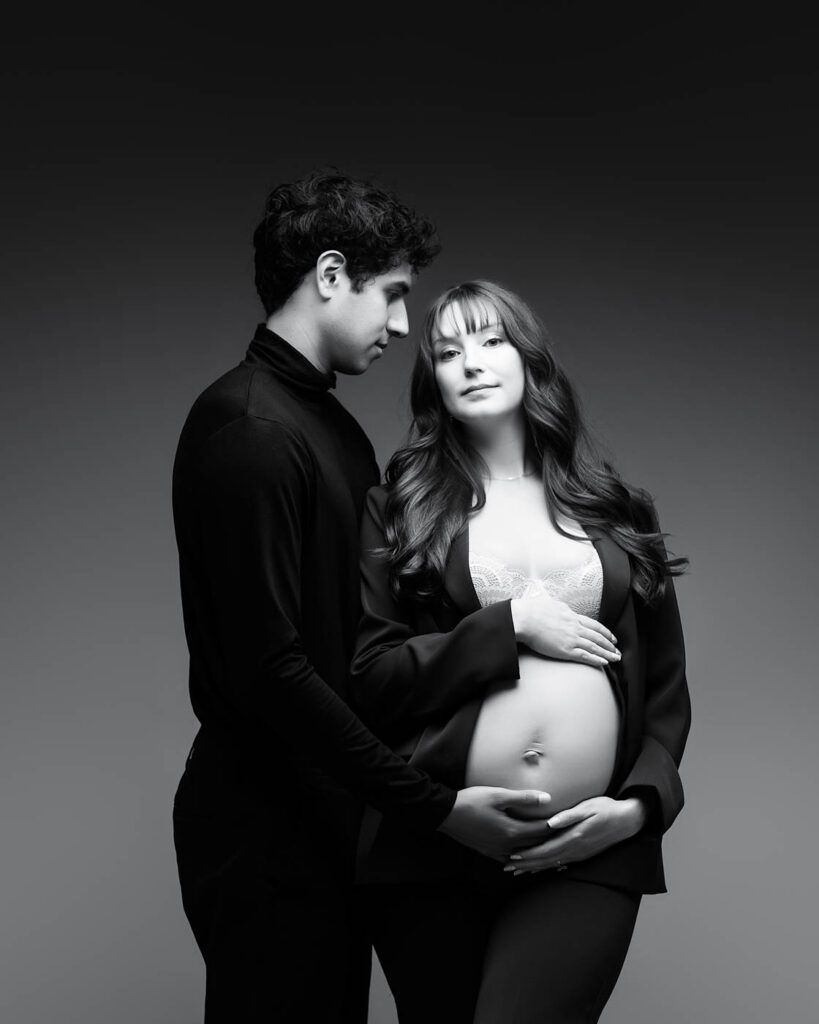
Negative space is the open area surrounding and between parts of the body. In maternity photography, even a small opening between the elbow and waist can help define the pregnancy shape. When an arm is pressed firmly against the torso, the waist may disappear. If both hands cover too much of the belly, its roundness can become less visible. Creating a controlled amount of space keeps the body defined without making the pose look exaggerated.
Negative space also matters when photographing couples. If two people wear dark clothing and stand closely together, their arms and torsos may visually merge. A small difference in shoulder position, hand placement, or distance from the light helps each person remain distinct while maintaining connection.
This is why working with a studio maternity photographer in Dallas involves more than being told where to stand. Every point where the arms, hands, clothing, and bodies meet affects the overall composition.
Why Hands Require Careful Maternity Posing
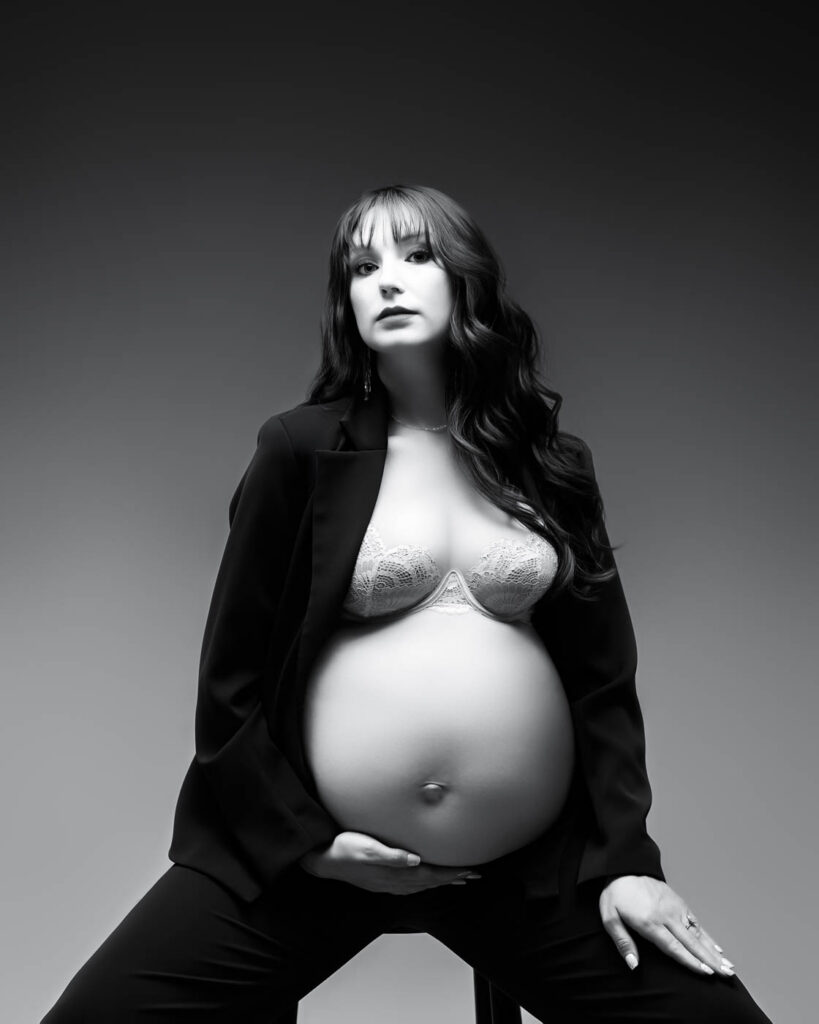
Hands attract attention because they are frequently positioned directly around the belly. Their placement should look relaxed while still contributing to the shape of the portrait. Pressing the palms firmly against the body can flatten the fingers and create visible tension. Turning the hands slightly, separating the fingers naturally, and placing them along different areas of the belly usually produces a cleaner result.
The hands do not always need to be stacked above and below the belly. Depending on the portrait, one hand may rest along the hip, hold a blazer lapel, touch the neck, or extend toward the leg.
Useful maternity photography hand poses include:
- One hand above and one below the belly
- One hand beneath the belly with the other at the waist
- Lightly holding the edge of a blazer or fabric
- Resting one hand on the thigh during a seated pose
- Using a partner’s hand to frame one side of the belly
- Bringing one hand toward the neck or hair
Hand placement should support the larger body line rather than becoming the main subject of the photograph.

How Studio Lighting Creates an Editorial Maternity Look
Lighting determines which parts of the body move forward visually and which areas recede. A large, softly positioned light can create gradual transitions across the face and belly. More directional studio lighting produces stronger definition through the cheekbones, shoulders, clothing, and pregnancy shape.
Dark clothing requires particular attention. When a black sleeve rests against a black dress or dark background, the edges can disappear. I use lighting direction, body angle, and small areas of negative space to separate overlapping shapes.
This does not mean every portrait needs deep shadows. The light can remain soft while producing enough contrast to define the face, hands, belly, and wardrobe. The important question is whether those areas remain visually distinct.
Professional editing further refines that balance. Skin tone, background, clothing detail, light, and smaller distractions are adjusted individually instead of applying one general effect across the gallery. My Before and After Maternity Editing Process shows how portraits are refined following a Dallas studio maternity session.

Why Seated Maternity Poses Look More Editorial
Seated maternity portraits naturally create stronger angles through the hips, legs, and arms. They can feel more fashion-oriented because the body is not relying on a traditional standing silhouette. A stool or chair should support the pose without becoming visually prominent. The mother may sit closer to the edge so her torso remains lengthened and her weight can be positioned through the hips instead of collapsing backward.
During a seated maternity photoshoot, I pay attention to keeping the spine lengthened, positioning the legs without compressing them, creating space between the arms and torso, and turning the belly toward the most effective light.
Seated poses can be created with a blazer, lingerie, fitted dress, bodysuit, or draped material. The outfit supports the photograph, but posture, hand placement, and camera height create the editorial structure.
Can Partners Be Included in Editorial Maternity Photography?
Partners can be included without changing the editorial direction of the session. The key is coordinating posture, expression, clothing and body placement so the couple appears connected without losing the composition. A partner may stand slightly behind the mother, sit beside her, look toward her face, or use one hand to frame the belly. Close portraits can emphasize expression and physical connection, while wider images show the couple’s full clothing and body positions.
Solid, understated clothing generally works well for editorial couple maternity photography. Black, cream, gray, and other neutral tones allow the couple’s faces and body language to remain the focus. Large logos, reflective watches, bright undershirts, and heavily patterned clothing can interrupt the composition.
Individual maternity portraits should still be included. This produces a balanced gallery with personal pregnancy photographs and couple images while retaining the same visual direction.

What Does a Dallas Studio Maternity Session Include?
A Dallas studio maternity session may include considerably more than the time spent in front of the camera. When comparing Dallas maternity photography collections, clients should review the complete experience rather than evaluating session length alone.
Depending on the selected collection, a professional maternity photography experience may include:
- Access to maternity gowns, fabrics, jewelry, and wardrobe pieces
- Assistance selecting outfits for the chosen portrait style
- Direction for individual and couple maternity poses
- Controlled studio lighting designed for each setup
- A private image-selection gallery
- Individual professional editing and retouching
- High-resolution digital portraits with a print release
- Transparent information about included and additional images
A full service maternity photographer in Dallas should explain these details before a client reserves a date. Most expecting mothers have no professional modeling experience, so direction for expression, hands, shoulders, posture, and body position should be included throughout the session.
Lily Hayes Photography offers fine art maternity photography near Dallas from a private Rowlett studio with access to more than 40 gowns, fabrics, and jewelry pieces. Each client can compare wardrobe options and portrait styles before deciding which collection fits her preferred look.
How to Choose an Editorial Maternity Photographer in Dallas
When comparing an editorial maternity photographer in Dallas, look beyond a few dramatic portfolio images. A complete gallery should show consistent lighting, thoughtful posing, relaxed hands, varied expressions, and professional editing across different clients and body types.
It is also helpful to consider whether the photographer provides:
- A private maternity photography studio near Dallas
- Experience with fine art and editorial posing
- Individual and couple maternity portraits
- Wardrobe assistance and access to studio clothing
- Multiple compositions within each wardrobe look
- Transparent Dallas maternity photography pricing
- Professionally edited high resolution images
- A clear process for reserving a session
A luxury maternity photographer in Dallas should offer more than access to decorative gowns. The value lies in the photographer’s ability to shape light, direct expression, refine body positioning, and create a consistent gallery from beginning to end.
Book an Editorial Maternity Photoshoot in Dallas
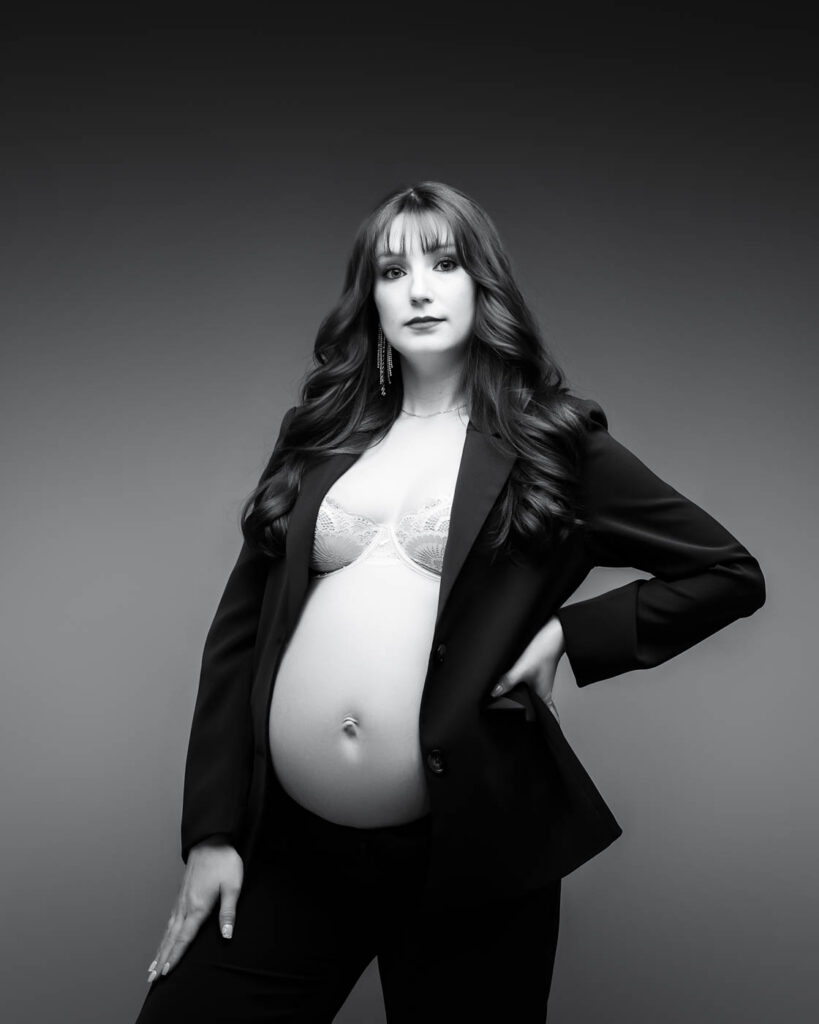
An editorial maternity portrait is not created by a blazer, serious expression, or black and white edit alone. It comes from the relationship between expression, body lines, hands, negative space, wardrobe, lighting, and camera angle. The smallest changes often create the greatest visual improvement. Relaxing the fingers, lowering one shoulder, creating space at the waist, or moving an elbow toward the light can alter the entire composition.
Lily Hayes Photography is a professional pregnancy photographer in Dallas offering editorial and fine art maternity sessions from a private Rowlett studio. The studio serves expecting mothers throughout Dallas, Rockwall, Plano, Frisco, Richardson, McKinney, Allen, and nearby DFW communities.
Compare wardrobe access, included images, and current Dallas Maternity Photography Collections and Pricing. When you are ready to book an editorial maternity photoshoot in Dallas, visit the maternity photography Inquiry page to ask about availability and reserve your session.